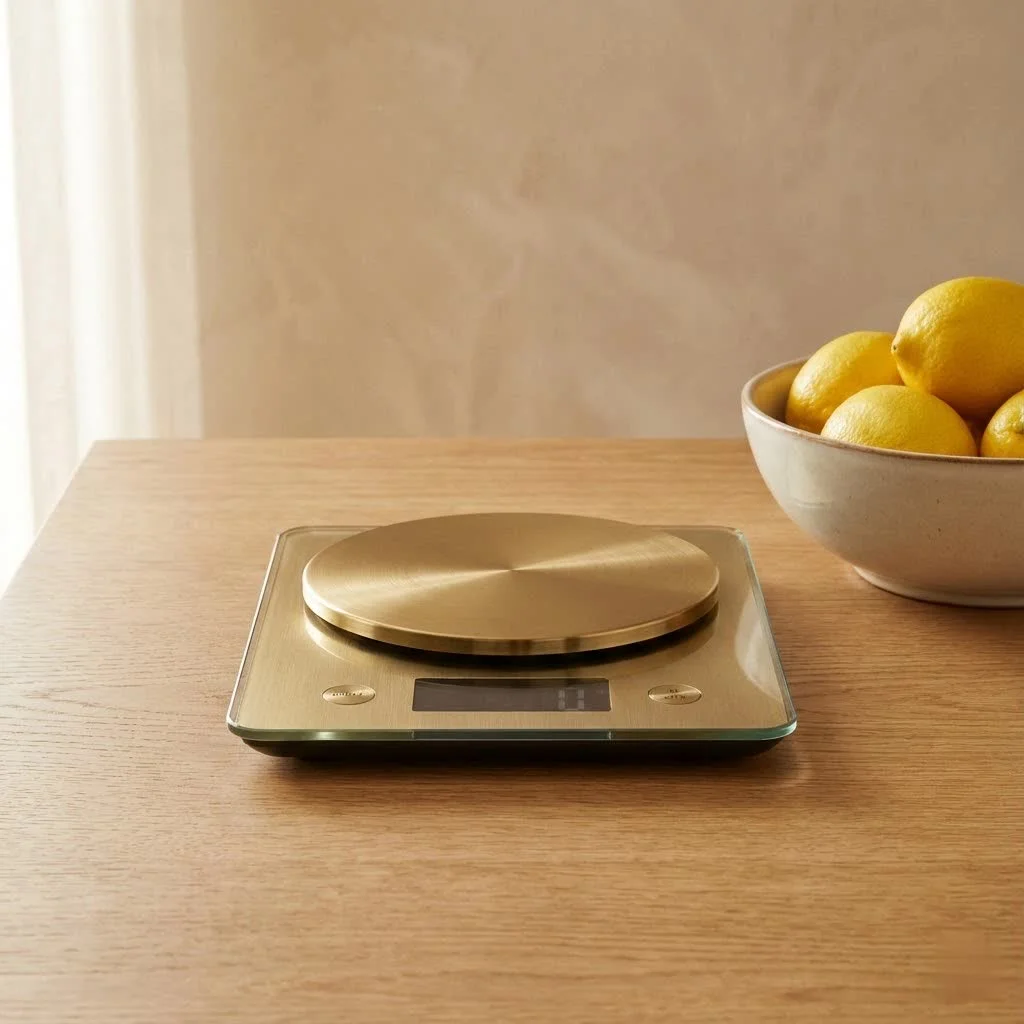
A precision kitchen scale is an essential tool for consistent culinary results, offering exact weight measurements that eliminate guesswork in baking, cooking, and portion control. Unlike volume measurements, which can vary significantly, a digital precision scale provides accuracy down to 0.1g or 0.01g, ensuring recipes are followed precisely for optimal flavor and texture. This accuracy is crucial for delicate recipes like macarons, strict dietary adherence, and reproducing favorite dishes consistently.
Why Precision Matters: Beyond Just Baking
You might wonder, “Do I really need a precision kitchen scale?” The answer, especially if you’re serious about your food, is a resounding yes. Here’s why embracing weight over volume can improve your culinary experience. For browse all kitchen scales articles on this site.
Accuracy in Measurement: The Weighty Truth
Imagine a cup of flour. Depending on how you scoop it – sifted, spooned, or packed – that “cup” can vary in weight by as much as 25-50 grams. This discrepancy is a recipe for disaster in baking, where ratios are king. A precision kitchen scale eliminates this guesswork, providing an exact weight every time. It’s the difference between guessing and knowing, which translates directly to better outcomes.
Baking Success: The Science of Consistency
Baking is often called a science, and for good reason. Precise ratios of ingredients like flour, sugar, butter, and leavening agents dictate the final texture, rise, and flavor of your baked goods. Even a slight deviation can lead to a dense cake, crumbly cookies, or a flat bread. With a precision kitchen scale, you can confidently follow recipes down to the gram, ensuring that your soufflés rise perfectly and your artisan breads develop the ideal crumb.
Portion Control & Dietary Needs
For those managing their diet, tracking macros, or adhering to specific meal plans, a precision kitchen scale is an invaluable ally. It allows you to measure exact portion sizes for proteins, carbohydrates, and fats, giving you full control and a clear understanding of your nutritional intake. No more estimating—just precise, reliable data to support your health goals.
Reduced Cleanup: A Kitchen Dream
Believe it or not, using a scale can actually mean fewer dishes. With the magic of the “tare” function, you can measure multiple ingredients sequentially into a single bowl. This streamlines your workflow and significantly cuts down on washing up, making your cooking process more efficient and enjoyable.
Consistency in Cooking: Every Dish, Every Time
While baking demands exactitude, even everyday cooking benefits from precision. Whether you’re making a sauce, seasoning a marinade, or perfecting a spice blend, consistent measurements lead to consistent flavor. A precision kitchen scale helps you reproduce your favorite dishes with reliable results, ensuring every meal is as delicious as the last.
“The secret to elevating home cooking lies in understanding the fundamentals, and precise measurement is arguably the most impactful,” says Chef Anya Sharma, a renowned culinary instructor. “A good scale takes the guesswork out, allowing your creativity to truly shine.”
Understanding Precision: What Makes a Scale Accurate?
When we talk about a “precision” kitchen scale, what exactly are we referring to? It boils down to the technology and features that allow for highly accurate and consistent readings.
Digital vs. Analog: The Clear Winner
|
Our Picks for the Best Kitchen Scale in 2026
As an Amazon Associate I earn from qualifying purchases.
|
||
| Num | Product | Action |
|---|---|---|
| 1 | Etekcity Food Kitchen Scale, Digital Grams and Ounces for Weight Loss, Baking, Cooking, Keto and Meal Prep, LCD Display, Medium, 304 Stainless Steel |

|
| 2 | Etekcity Digital Food Kitchen Scale, Grams and Oz for Weight Loss, Baking and Cooking, 0.05oz/1g Precise Graduation,5 Weight Units, IPX6 Waterproof, USB Rechargeable,304 Stainless Steel-Silver, 22lb |
|
| 3 | Amazon Basics Digital Kitchen Scale with LCD Display, Batteries Included, Weighs up to 11 pounds, Black and Stainless Steel |
|
| 4 | Food Scale -33lb Digital Kitchen Scale for Food Ounces Grams Rechargeable 304 Stainless Steel,Batteries and Type-C Charging - Perfect for Meal Prep, Cooking, and Baking, Black |
|
| 5 | Digital Pocket Scale, High-Precision 500g x 0.01g Gram Scale with 50g Calibration Weight, Mini 6 Units Jewelry Scale with LCD Display, Tare Function for Food, Jewelry, Coin, Coffee, Battery Included |
|
| 6 | Electronic Kitchen Scale |
|
| 7 | Nicewell Food Scale, 22lb Digital Kitchen Scale Weight Grams and oz for Cooking Baking, 1g/0.1oz Precise Graduation, Stainless Steel and Tempered Glass (Ash Silver) |
|
| 8 | OXO Good Grips 11-Pound Stainless Steel Kitchen Scale with Pull-Out Display - Black |
|
| 9 | Tcsxady Food Scale, 11lb Digital Kitchen Scale with 6 Units LCD Display and Tare Function,Compact Design for Baking,Healthy Cooking,Meal Prep, 304 Stainless Steel |
|
| 10 | KitchenAid KQ909 Dual Platform Digital Kitchen and Food Scale, 11 pound capacity and Precision 16oz capacity, Black with Stainless Steel |
|
While charming, old-school analog scales, which rely on springs, offer less precision and can be harder to read. Digital kitchen scales, however, utilize electronic sensors (often called load cells) to provide instant, clear, and highly accurate measurements. They are the undisputed champion for precision in the modern kitchen.
Measurement Increments: 1g vs. 0.1g/0.01g
Most standard digital kitchen scales offer accuracy to 1 gram (g) or 0.05 ounces (oz). This level of precision is perfectly adequate for the vast majority of home cooking and baking tasks. However, “high-precision” or “micro” scales can measure in increments of 0.1g or even 0.01g.
- 1g Accuracy: Ideal for general baking, cooking, and portion control. For example, weighing flour, sugar, or meat.
- 0.1g/0.01g Accuracy: Essential for ultra-small measurements like yeast, saffron, certain spices, or for highly specialized tasks like coffee brewing where a fraction of a gram can impact flavor. These are also favored by advanced bakers using baker’s percentages.
Capacity Considerations
Precision kitchen scales come with varying maximum capacities. General-purpose scales typically handle up to 5-11 kilograms (11-22 pounds), sufficient for most home needs. However, scales with extreme precision (0.1g or less) often have a lower maximum capacity, sometimes only a few hundred grams. Consider your primary use: do you need to weigh large batches of dough or tiny amounts of leavening?
Choosing Your Perfect Precision Kitchen Scale
Selecting the right precision kitchen scale involves balancing your needs with key features. Here’s what to look for to ensure you make an informed decision.
Key Features to Look For
Tare Function: Your Best Friend in the Kitchen
This is arguably the most vital feature of any digital scale. The tare function allows you to zero out the weight of a container or previous ingredients, so you’re always measuring only the new item you’re adding. It’s indispensable for multi-ingredient recipes and for minimizing dishwashing.
Unit Conversion: Grams, Ounces, Milliliters, Pounds
Your scale should effortlessly switch between common units, primarily grams (g) and ounces (oz), as many recipes use both. The ability to measure in pounds (lb) and milliliters (ml) for liquids (assuming water density) is also a significant plus, offering versatility for various recipes and dietary tracking.
Display Readability: Bright, Backlit, Pull-out Options
A clear, brightly lit, and easy-to-read digital display is non-negotiable. Some models even feature a pull-out display that prevents large mixing bowls or plates from obscuring the readings, a thoughtful design for busy kitchens.
Platform Size and Material: Versatility & Hygiene
Look for a weighing platform that is large enough to accommodate your typical mixing bowls and plates. Materials like stainless steel or tempered glass are excellent choices as they are durable, easy to clean, and resistant to stains and odors. Some scales offer removable platforms for even easier cleaning. For ultimate convenience, some scales are even IP-rated (waterproof), allowing for thorough washing.
Power Source & Auto-Off
Most digital scales run on batteries, so consider models with an auto-off feature to conserve power. Some advanced scales offer rechargeable batteries or USB charging, adding convenience. A few might even have adjustable auto-off times.
Durability & Build Quality
A good precision kitchen scale should feel sturdy and well-built. Look for sealed buttons, which protect against spills and make cleaning easier, contributing to the longevity of your device.
Unlocking Accuracy: How to Use Your Precision Kitchen Scale Effectively
Even the best scale needs to be used correctly to deliver truly precise results. Here are the essential techniques to master.
Placement Matters: A Stable Foundation
Always place your precision kitchen scale on a flat, stable, and level surface. Uneven surfaces or wobbly counters can cause inaccurate readings by unevenly distributing weight on the sensors. Avoid placing it near vibrating appliances or in drafty areas, as these can also affect stability.
Mastering the Tare: Step-by-Step
The tare function is your secret weapon for precise, multi-ingredient measurements:
- Turn On: Power on your scale.
- Place Container: Put your empty mixing bowl or container on the scale. It will display its weight.
- Tare to Zero: Press the “Tare” or “Zero” button. The display should now read “0”. The scale has effectively “forgotten” the weight of the container.
- Add First Ingredient: Slowly add your first ingredient until you reach the desired weight.
- Tare Again: Once measured, press “Tare” again. The display will return to “0”.
- Repeat: Add your next ingredient, tare, and continue this process until all ingredients are measured into the same bowl.
to add ingredients slowly to avoid overshooting, as it can be tricky to remove small amounts once added.
Adding Ingredients Safely and Precisely
When adding ingredients, pour or spoon them gently. For dry ingredients like flour, avoid compacting them. Wait a moment for the display to stabilize before confirming the measurement, especially with very small increments. Reading the display directly from above, at eye level, can also help prevent parallax errors, ensuring you get the most accurate reading.
Calibration: Keeping Your Scale Honest
Over time, or if a scale has been moved or dropped, its calibration might drift. Regular calibration ensures your scale remains accurate. Many scales come with instructions for calibration using a specific weight (often 500g or 1kg). If yours doesn’t, you can often find a reliable calibration weight online. Follow your manufacturer’s instructions, or consider calibrating your scale once or twice a year, or if you suspect inconsistencies.
Maintaining Your Precision Partner: Care Tips for Longevity
A well-maintained precision kitchen scale will serve you faithfully for years. A little care goes a long way in preserving its accuracy and lifespan.
Regular Cleaning: A Simple Routine
After each use, especially with messy ingredients, gently wipe down your scale with a damp cloth. Avoid harsh abrasive cleaners or chemicals like ethanol, which can damage the surface or sensors. For scales with removable platforms, take them off for a more thorough wash. Always ensure the scale is completely dry before storing it. unless explicitly stated as waterproof (with an IP rating), never submerge a digital scale in water.
Proper Storage: Protecting the Sensors
Store your precision kitchen scale flat, ideally in a drawer or cabinet where nothing will press down on the weighing platform. Storing it sideways or with objects resting on it can put unnecessary strain on the internal sensors, compromising accuracy over time. If storing for an extended period, remove the batteries to prevent corrosion.
Avoiding Overload & Misuse
Every scale has a maximum capacity. Exceeding this limit can damage the load cells and permanently impair accuracy. Treat your scale gently; avoid dropping it or placing heavy items on it abruptly. Your scale is a sensitive instrument, and rough handling will diminish its precision.
Top Brands and Innovations in Precision Kitchen Scales
The market offers a fantastic range of precision kitchen scales, each with unique strengths. Brands like OXO, Escali, and Etekcity consistently receive high marks for their reliability, accuracy, and user-friendly designs. From scales with sleek stainless steel finishes and pull-out displays to those with specialized baker’s percentage modes, there’s a perfect match for every kitchen.
At Lodcs.com, we pride ourselves on dissecting these innovations, offering in-depth reviews, and sharing practical advice to help you navigate the choices. Our goal is to empower you with the knowledge to select a scale that truly enhances your culinary journey.
FAQ
What is the difference between a regular kitchen scale and a precision kitchen scale?
The primary difference lies in the increments of measurement. A “regular” kitchen scale typically measures to the nearest 1 gram or 0.1 ounce, which is suitable for most general cooking. A “precision kitchen scale,” often also called a micro or gram scale, measures in smaller increments, such as 0.1 gram or even 0.01 gram, making it ideal for extremely small quantities where minute differences matter, like spices or yeast.
How often should I calibrate my precision kitchen scale?
While many modern digital scales are designed to hold their calibration well, it’s generally a good practice to calibrate your precision kitchen scale every 6 to 12 months, or as recommended by the manufacturer. You should also calibrate it if you move it to a new location, notice inconsistent readings, or after it has been dropped.
Can I use a precision kitchen scale for coffee or jewelry?
Absolutely! Scales with 0.1g or 0.01g precision are highly sought after by coffee enthusiasts for accurately measuring beans and water for brewing, as small changes greatly affect flavor. Similarly, jewelers and hobbyists often use these scales for weighing precious metals or tiny components, where exact measurements are critical.
What is the “baker’s percentage” mode?
Some advanced precision kitchen scales include a “baker’s percentage” mode. This feature allows bakers to input the total weight of flour as 100%, and then other ingredients are displayed as a percentage of that flour weight. This simplifies scaling recipes up or down and is particularly useful for crafting complex bread formulas.
Why are my scale readings inconsistent?
Inconsistent readings can be caused by several factors: an uneven or unstable surface, nearby vibrations or drafts, a low battery, an overloaded scale, or the need for recalibration. Ensure your scale is on a flat surface, away from disturbances, and has fresh batteries. If problems persist, recalibrate or consult the manufacturer’s guide.
improve your Culinary Journey
Embracing a precision kitchen scale is more than just buying a new tool; it’s an investment in your culinary skills, your health, and the sheer joy of consistently great results. From perfecting complex recipes to ensuring healthy portion control, the benefits are undeniable. It transforms cooking from an approximation to an art form, giving you the confidence and accuracy to create truly memorable dishes.
So, take the plunge. Explore the world of precision kitchen scales, choose the one that fits your culinary ambitions, and experience the difference that true accuracy makes in your kitchen. Your taste buds, and your family, will thank you.
Frequently Asked Questions
What is the main difference between a regular and a precision kitchen scale?
The primary difference lies in measurement increments. A regular kitchen scale typically measures to the nearest 1 gram or 0.1 ounce, suitable for general cooking. A precision kitchen scale, also known as a micro or gram scale, measures in smaller increments like 0.1 gram or even 0.01 gram, which is ideal for minute quantities such as spices or yeast.
How frequently should I calibrate my precision kitchen scale?
It is generally recommended to calibrate your precision kitchen scale every 6 to 12 months, or as specified by the manufacturer. Calibration is also advisable if the scale is moved, shows inconsistent readings, or has been dropped, to maintain its accuracy.
Can a precision kitchen scale be used for coffee brewing or jewelry weighing?
Yes, absolutely. Scales with 0.1g or 0.01g precision are highly valued by coffee enthusiasts for precise bean and water measurements, as small variations significantly impact flavor. Similarly, jewelers and hobbyists use these scales for weighing precious metals or tiny components where exact measurements are critical.
What does the 'baker's percentage' mode on a kitchen scale do?
Some advanced precision kitchen scales feature a 'baker's percentage' mode. This function allows bakers to set the total flour weight as 100%, then displays other ingredients as a percentage of that flour weight. This simplifies scaling recipes and is particularly useful for developing complex bread formulas.
Why might my kitchen scale provide inconsistent readings?
Inconsistent readings can stem from several issues, including an uneven or unstable surface, nearby vibrations or drafts, a low battery, an overloaded scale, or the need for recalibration. Ensure the scale is on a flat, stable surface, away from disturbances, and has fresh batteries. If problems persist, recalibrate or consult the manufacturer's guide.
How to Use Your Precision Kitchen Scale Effectively
Master essential techniques for accurate measurements with your precision kitchen scale, including proper placement, using the tare function, and safe ingredient addition.
Always place your precision kitchen scale on a flat, stable, and level surface. Uneven surfaces or vibrations can lead to inaccurate readings by affecting the internal sensors.
Use the tare function to zero out the weight of containers or previous ingredients. This allows you to measure multiple ingredients sequentially into a single bowl, streamlining your process and reducing cleanup.
Pour or spoon ingredients gently onto the scale, avoiding compaction for dry items like flour. Wait for the display to stabilize before confirming the measurement, especially for small increments, and read the display at eye level to prevent parallax errors.
Calibrate your scale once or twice a year, or if you suspect inconsistencies, to ensure it remains accurate over time. Many scales come with instructions for calibration using a specific weight, typically 500g or 1kg.
Cooking gear we tested in our own kitchens
Free PDF — preheat times measured on 10 popular air fryers.
I finally caved and bought a precision kitchen scale after struggling with macarons for ages. This thing is a game-changer! Measuring ingredients like almond flour and sugar down to 0.1g really does make all the difference. My last batch came out perfect, no more cracked shells or hollow centers. Wish I’d gotten one sooner.
I’ve been using a basic digital scale for a while, but the jump to one with 0.01g accuracy for my spices and yeast has been great. It’s especially useful for making small batches of sourdough starter where every gram counts. The only minor thing is the platform can be a bit small for larger bowls, but I manage.
This scale has totally transformed my baking. I used to just eyeball things or use measuring cups, but now that I’m weighing everything, my cakes and breads are so much more consistent. It’s especially helpful for delicate recipes where even a slight variation can mess things up. Definitely worth the investment for anyone serious about cooking.
Got one of these for portion control and it’s mostly good. It’s accurate for sure, which is what I needed for my diet. However, the auto-off feature kicks in a little too fast sometimes when I’m adding multiple ingredients slowly. It’s a minor annoyance but something to be aware of if you’re doing complex recipes.