Stepping into the kitchen, whether you’re a seasoned chef or a budding home cook, you quickly realize that cooking is often as much a science as it is an art. While a pinch of this and a dash of that can work for some, achieving consistently delicious results, especially in baking or intricate recipes, demands accuracy. This is precisely where a high-quality Digital Kitchen Scale becomes an indispensable tool. Forget guesswork and embrace precision; a digital kitchen scale elevates your culinary game, ensuring every ingredient is perfectly measured for flawless outcomes.
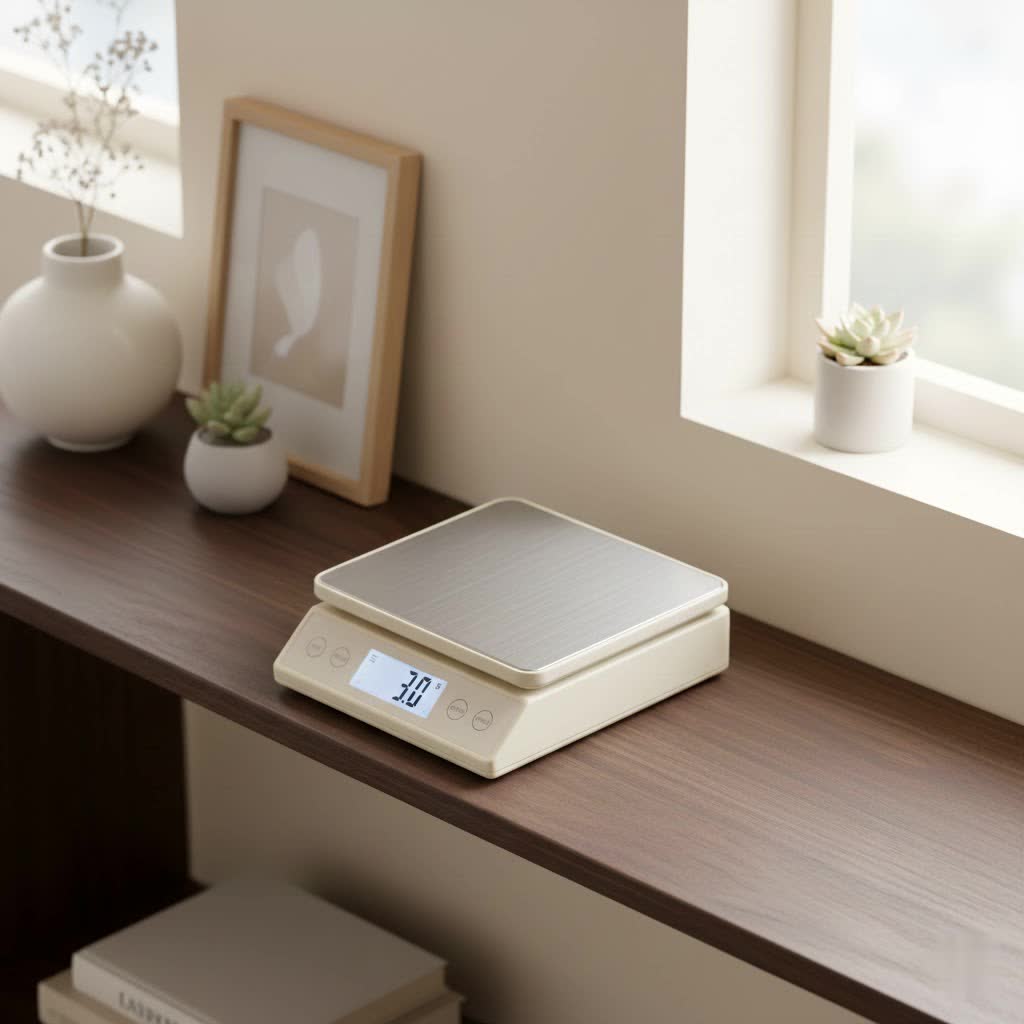
Why Every Home Cook Needs a Digital Kitchen Scale
In a world where speed and convenience often take precedence, it might seem like an extra step to weigh ingredients instead of just scooping. However, the benefits of using a digital kitchen scale are profound and transformative for any kitchen.
Firstly, consistency is king. If you’ve ever wondered why your favorite cake recipe sometimes turns out perfect and sometimes falls flat, inconsistent measurements are often the culprit. A digital kitchen scale eliminates volume discrepancies, ensuring the exact amount of flour, sugar, or butter every single time. This leads to repeatable success and more confident cooking.
Secondly, for health-conscious individuals, a digital kitchen scale is a game-changer for portion control. Accurately measuring servings of proteins, grains, or snacks is crucial for managing dietary intake and achieving health goals. It helps you stay accountable and truly understand what you’re consuming.
Baking, in particular, thrives on precision. Ingredients like flour can vary significantly in weight depending on how compactly they’re packed into a measuring cup. A cup of flour can weigh anywhere from 120g to 150g. A digital kitchen scale measures by weight, providing an exact number that doesn’t change with packing density, ensuring your baked goods have the perfect texture and rise every time.
Finally, less mess and fewer dishes! Instead of using multiple measuring cups and spoons, you can often add ingredients directly to your mixing bowl on the scale, taring (resetting to zero) between additions. This streamlines your workflow and makes cleanup a breeze.
Understanding the Different Types of Digital Kitchen Scales
While the core function of a digital kitchen scale remains consistent—to provide accurate weight measurements—they come in various forms, each suited for different culinary tasks.
The most common type you’ll encounter is the platform digital kitchen scale. These are versatile, featuring a flat surface where you place your bowl or ingredients. They typically handle a wide range of weights, from a few grams up to several kilograms, making them ideal for everyday cooking and baking.
For those incredibly precise tasks, like measuring tiny amounts of spices, yeast, or potent extracts, mini digital kitchen scale or spoon scales are invaluable. These specialized scales often look like a large spoon with a built-in digital display, capable of measuring fractions of a gram with high accuracy.
If you frequently cook in large batches, perhaps for meal prepping or catering, high-capacity digital kitchen scales are designed for heavier loads. They offer a larger weighing surface and can support weights upwards of 10-15kg, perfect for bigger pots or multiple ingredients at once.
Finally, the advent of smart kitchen technology has brought us smart digital kitchen scales. These scales can connect to your smartphone or tablet via Bluetooth, allowing you to track nutritional information, access recipes, and even log your measurements directly into a cooking app. They add an extra layer of convenience and data tracking for tech-savvy home cooks.
Key Features to Look for When Choosing Your Digital Kitchen Scale
Selecting the perfect digital kitchen scale can seem daunting with the array of options available. Knowing what features truly matter will guide you to the best choice for your kitchen.
First and foremost, consider capacity and readability. Most home cooks will find a scale with a capacity of 5kg (around 11 lbs) sufficient. However, if you bake large loaves of bread or prepare big family meals, a higher capacity might be beneficial. Readability refers to the increments the scale measures in. For precision, especially in baking, look for a scale that measures in 1g (or 0.1 oz) increments. Some ultra-precise scales even offer 0.1g increments.
Accuracy and precision are non-negotiable. A reliable digital kitchen scale should provide consistent measurements every time. Look for models with good reviews regarding their accuracy and consider scales that offer calibration options, though many home scales are pre-calibrated and rarely need adjustment.
The tare function is perhaps the most essential feature. This allows you to reset the scale to zero after placing a container on it, effectively “subtracting” the weight of the container. It also lets you add multiple ingredients to the same bowl, taring after each addition to measure the next ingredient accurately.
Unit conversion is incredibly convenient. A good digital kitchen scale should easily switch between grams (g), ounces (oz), pounds (lb), and sometimes milliliters (ml) for liquids (though it’s important to remember this is a weight-to-volume conversion for water and isn’t perfectly accurate for all liquids). This flexibility makes following recipes from various sources much easier.
Material and design also play a role. Stainless steel surfaces are durable and easy to clean, while tempered glass can add a sleek, modern look. Consider the footprint of the scale; does it fit comfortably on your counter or store easily in a drawer?
Finally, think about the power source. Most digital kitchen scales run on AAA or AA batteries. Some advanced models might offer USB charging, which can be a convenient feature.
Mastering Your Digital Kitchen Scale: A Step-by-Step Guide
Using a digital kitchen scale is incredibly straightforward, but a few best practices will ensure you get the most accurate results every time.
- Placement is Key: Always place your digital kitchen scale on a flat, stable surface. Uneven surfaces can lead to inaccurate readings. Avoid placing it near heat sources or in direct sunlight, which can affect its internal components.
- Power On and Prepare: Turn on your scale. Most scales will default to grams or ounces. Ensure it reads “0” before placing anything on it.
- Utilize the Tare Function: This is where the magic happens.
- Place your empty mixing bowl or container onto the scale. Note its weight.
- Press the “Tare” or “Zero” button. The display should now read “0”.
- Add your first ingredient (e.g., flour) until you reach the desired weight.
- Press “Tare” again. The display resets to “0”.
- Add your next ingredient (e.g., sugar) to the same bowl. Repeat for all ingredients. This method saves on washing multiple bowls!
- Adding Ingredients Accurately: For powders or liquids, slowly pour or spoon them in. For larger solids, place them gently. Avoid dropping items onto the scale, which can cause temporary fluctuations in the reading.
- Switching Units: If your recipe calls for different units than what your scale is currently displaying, simply press the “Unit” or “Mode” button to cycle through the available options (g, oz, lb, ml).
“Understanding and consistently using the tare function is the single most important habit for any cook looking to maximize the benefits of their digital kitchen scale,” states Dr. Alice Chen, Culinary Technologist. “It transforms a simple weighing device into a multi-ingredient measurement powerhouse.”
Essential Maintenance Tips for Longevity and Accuracy
To ensure your digital kitchen scale remains a reliable culinary partner for years to come, a little routine maintenance goes a long way.
Cleaning: This is perhaps the simplest yet most crucial step. After each use, wipe down your scale with a damp cloth. For sticky spills, a mild soap solution can be used. Avoid abrasive cleaners or submerging the scale in water, as this can damage the electronic components. Always ensure the scale is completely dry before storing it.
Calibration: While many modern digital kitchen scales are factory-calibrated and hold their accuracy well, some models offer a calibration feature. If you suspect your scale is no longer accurate (e.g., if it consistently gives different readings for the same known weight), consult your user manual for calibration instructions. This usually involves placing a specific calibration weight (often sold separately) on the scale and following a series of button presses. For most home users, professional calibration is rarely needed, but knowing the option exists is good.
Storage: Store your digital kitchen scale in a clean, dry place where it won’t be exposed to extreme temperatures or humidity. Avoid stacking heavy objects on top of it, which could damage the weighing mechanism. A dedicated drawer or shelf is ideal.
Battery Care: If your scale uses batteries, remove them if you don’t plan to use the scale for an extended period (e.g., several months). This prevents battery leakage, which can corrode the battery compartment and damage the scale. Replace batteries promptly when the low-battery indicator appears to maintain optimal performance.
Top Brands and What Makes Them Stand Out
When exploring the market for a digital kitchen scale, you’ll encounter numerous brands, each offering a unique combination of features, aesthetics, and price points. While specific recommendations can vary with new models and evolving technology, focusing on what defines a strong brand helps in your decision.
Leading brands often distinguish themselves through superior build quality, using durable materials like stainless steel or high-grade tempered glass that withstand the rigors of a busy kitchen. They prioritize accuracy and consistency, often incorporating advanced sensor technology to ensure precise measurements down to the gram or tenth of an ounce. User-friendly interfaces, with clear, backlit displays and intuitive button layouts, are also hallmarks of top-tier digital kitchen scales.
Many reputable brands also offer excellent customer support and warranty policies, giving you peace of mind with your purchase. Features like a larger weighing surface, an extended tare function (allowing for multiple tares), and robust unit conversion options (including liquid measurements like ml) are often found in higher-end models from well-regarded manufacturers.
At Lodcs.com, we constantly review and analyze the market, focusing on products that offer exceptional value, durability, and most importantly, the precision that our community of home cooks and bakers demands. We believe that an informed choice leads to a better culinary experience, and a reliable digital kitchen scale is foundational to that experience.
Frequently Asked Questions (FAQ)
How accurate are digital kitchen scales?
|
Our Picks for the Best Kitchen Scale in 2026
As an Amazon Associate I earn from qualifying purchases.
|
||
| Num | Product | Action |
|---|---|---|
| 1 | Etekcity Food Kitchen Scale, Digital Grams and Ounces for Weight Loss, Baking, Cooking, Keto and Meal Prep, LCD Display, Medium, 304 Stainless Steel |

|
| 2 | Nicewell Food Scale, 22lb Digital Kitchen Scale Weight Grams and oz for Cooking Baking, 1g/0.1oz Precise Graduation, Stainless Steel and Tempered Glass (Ash Silver) |
|
| 3 | Electronic Kitchen Scale |
|
| 4 | Food Scale -33lb Digital Kitchen Scale for Food Ounces Grams Rechargeable 304 Stainless Steel,Batteries and Type-C Charging - Perfect for Meal Prep, Cooking, and Baking, Black |
|
| 5 | Amazon Basics Digital Kitchen Scale with LCD Display, Batteries Included, Weighs up to 11 pounds, Black and Stainless Steel |
|
| 6 | OXO Good Grips 11-Pound Stainless Steel Kitchen Scale with Pull-Out Display - Black |
|
| 7 | Tcsxady Food Scale, 11lb Digital Kitchen Scale with 6 Units LCD Display and Tare Function,Compact Design for Baking,Healthy Cooking,Meal Prep, 304 Stainless Steel |
|
| 8 | Digital Pocket Scale, High-Precision 500g x 0.01g Gram Scale with 50g Calibration Weight, Mini 6 Units Jewelry Scale with LCD Display, Tare Function for Food, Jewelry, Coin, Coffee, Battery Included |
|
| 9 | KitchenAid KQ909 Dual Platform Digital Kitchen and Food Scale, 11 pound capacity and Precision 16oz capacity, Black with Stainless Steel |
|
| 10 | Etekcity Digital Food Kitchen Scale, Grams and Oz for Weight Loss, Baking and Cooking, 0.05oz/1g Precise Graduation,5 Weight Units, IPX6 Waterproof, USB Rechargeable,304 Stainless Steel-Silver, 22lb |
|
Most quality digital kitchen scales for home use are highly accurate, measuring typically within 1 gram or 0.1 ounces. Professional-grade scales can offer even greater precision, down to 0.1 grams or less. Their accuracy is generally much higher and more consistent than volume measurements for dry ingredients.
Can I weigh liquids on a digital kitchen scale?
Yes, you can weigh liquids like water, milk, or oil on a digital kitchen scale. Scales often have a “milliliter” (ml) unit, but this is usually a conversion based on the density of water (1g = 1ml). For liquids with significantly different densities than water, it’s more accurate to measure by weight (grams) and convert using the liquid’s specific density, or rely on volume measurements for those specific liquids.
What is the tare function used for?
The tare function is used to reset the scale’s reading to zero. This is incredibly useful for subtracting the weight of a container (so you only measure the ingredients inside) or for measuring multiple ingredients sequentially in the same bowl without having to remove and re-weigh the container.
How often should I calibrate my digital kitchen scale?
For most home-use digital kitchen scales, calibration is rarely needed. They are typically factory-calibrated and maintain accuracy for a long time. However, if you notice inconsistent readings or have dropped the scale, you might consider calibrating it according to the manufacturer’s instructions, often using a specific calibration weight.
What’s the difference between a kitchen scale and a postal scale?
While both measure weight, a digital kitchen scale is designed for the specific needs of cooking and baking. It typically offers higher precision for smaller weights (grams/ounces), a tare function, and unit conversion useful for recipes. Postal scales are often designed for larger, less precise weights, focusing on mailing packages rather than culinary ingredients.
Are all digital kitchen scales the same?
No, digital kitchen scales vary significantly in capacity, precision, features (like smart connectivity), materials, and price. While their basic function is the same, the quality of sensors, durability of materials, and range of functionalities can differ greatly between models and brands.
Conclusion
Embracing the digital kitchen scale is more than just adopting a new gadget; it’s a commitment to culinary excellence and consistent results. From ensuring your baked goods rise perfectly to managing precise portions for a healthier lifestyle, the accuracy and convenience offered by a reliable digital kitchen scale are unmatched. By understanding the types available, choosing one with the right features, and maintaining it properly, you equip yourself with a powerful tool that transforms guesswork into guaranteed success. So, take the leap, measure with confidence, and discover a whole new level of precision in your kitchen. Your taste buds—and your waistline—will thank you!
